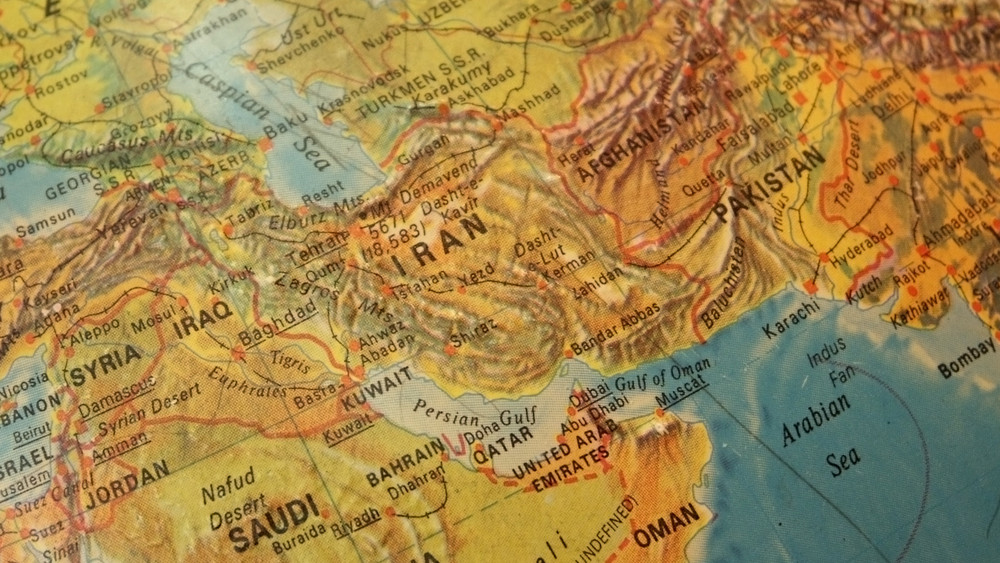
Home Latest Energy News By Tsvetana Paraskova - Nov 04, 2026, 4:15 AM CST Four oil tankers were destroyed after hitting naval mines in an area south of the Strait of Hormuz proscribed by Iran as prohibited for navigation, Iran’s Islamic Revolutionary Guard Corps (IRGC) said on Wednesday, as attacks on vessels in the region intensify while crude oil flows have dipped from recent highs. The four tankers are still ablaze, while two other vessels have been seized, the Revolutionary Guards said. While flows have recovered substantially from the lows in the spring, the security situation in and near the Strait of Hormuz has actually deteriorated, with a higher number of attacks on tankers in recent weeks.
Following a post-war peak in September, exports of crude oil, condensate, and fuels from the Middle East slipped to 17.1 million barrels per day (bpd) in October, down from 18.9 million bpd in September, according to data from Vortexa cited by Reuters . “October data shows Middle East seaborne oil exports have pulled back slightly from recent post-war highs on heightened risks in the Strait of Hormuz,” George Morris, an analyst at Vortexa, said in comments reported by the publication. Kpler has tracked a 1-million-bpd drop in total crude oil and condensate exports.
Crude and condensate flows through the Strait of Hormuz, the Red Sea, and the Gulf of Oman are estimated, provisionally, to have dropped to 16.1 million bpd in October, from 17.09 million bpd in September. However, the tanker-tracking services caution that the numbers could be revised up as more details on shipments, especially shuttle shipments, emerge in the coming days. Oil flows from the Middle East region have materially increased since the lows in April and May, but the heightened security concerns and intensified attacks, mines, and other explosions and incidents are making tracking shipments difficult.
Tanker-trackers increasingly rely on satellite imagery to confirm movements because vessels are often switching off transponders to avoid detection when transiting the Strait of Hormuz. By Tsvetana Paraskova for Oilprice.com More Top Reads From Oilprice.com US Crude Oil Inventories Still in Freefall ADNOC Gas to Supply LNG to TotalEnergies Under Five-Year Deal Indian Refiner BPCL Buys U.S. WTI Crude Oil Cargo Join the discussion | Back to homepage Tsvetana Paraskova What I Cover Tsvetana Paraskova is an energy and commodities journalist who has contributed to Oilprice.com for nearly a decade, covering global energy markets, commodities,...
More Info Leave a comment EXXON Mobil -0.35 Open 57.81 Trading Vol. 6.96M Previous Vol. 241.7B BUY 57.15 Sell 57.00 "